

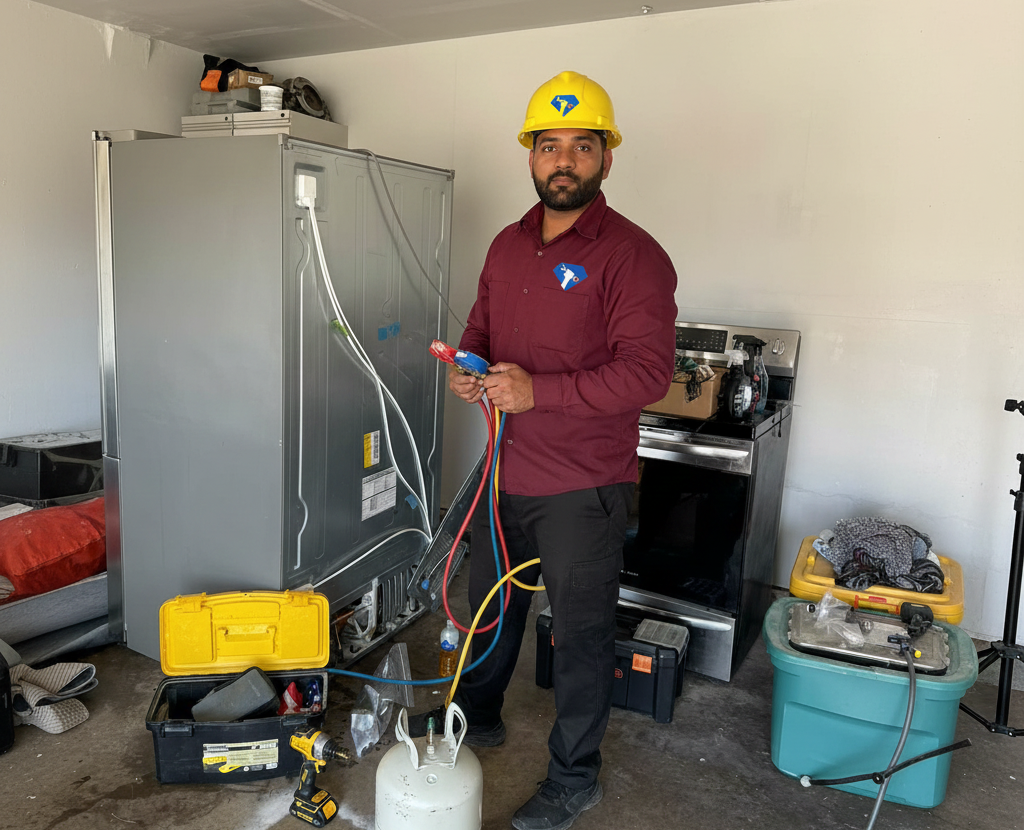
A refrigerator that isn’t cooling properly can quickly become a stressful problem. Warm temperatures inside your fridge can spoil food, increase energy costs, and may indicate a more serious issue that requires professional attention.
Before assuming you need a replacement, it’s worth checking a few common causes. In many cases, the problem can be identified early and repaired, helping you avoid unnecessary expenses.
1. Incorrect Temperature Settings
Sometimes the simplest solution is the right one. Temperature controls can be accidentally adjusted while cleaning or organizing groceries.
For optimal performance:
- Refrigerator: 37°F (3°C)
- Freezer: 0°F (-18°C)
If the settings have changed, allow up to 24 hours for the refrigerator to stabilize.
2. Dirty Condenser Coils
Condenser coils help release heat from your refrigerator. Over time, they collect dust, dirt, and pet hair, forcing the appliance to work harder.
Signs of dirty coils include:
- Poor cooling performance
- Longer running cycles
- Higher electricity bills
- Warm sides of the refrigerator
Cleaning the coils every six months can improve efficiency and extend the life of your appliance.
3. Blocked Air Vents
Cold air needs to circulate freely throughout the refrigerator. Large food containers placed directly in front of air vents can restrict airflow and create warm spots.
Try rearranging items so vents remain unobstructed.
4. Worn Door Gaskets
The rubber seal around your refrigerator door keeps cold air inside. If it becomes cracked, loose, or damaged, warm air can enter the refrigerator, causing it to lose cooling efficiency.
Common signs include:
- Moisture around the door
- Excessive condensation
- The door doesn’t close tightly
- Increased compressor run time
Replacing a damaged gasket is often an affordable repair that can significantly improve performance.
5. Faulty Evaporator Fan
The evaporator fan circulates cold air from the freezer to the refrigerator compartment. If this fan stops working, your freezer may remain cold while the refrigerator section becomes warm.
You may notice:
- Unusual buzzing or grinding noises
- Warm refrigerator compartment
- Uneven cooling
This issue typically requires diagnosis and repair by a qualified technician.
6. Defrost System Problems
Modern refrigerators automatically defrost to prevent ice buildup. If the defrost heater, thermostat, or control board fails, ice can accumulate around the evaporator coils, restricting airflow.
Symptoms include:
- Frost buildup inside the freezer
- Reduced cooling
- Water leaks after partial thawing
Professional inspection is recommended to identify the faulty component.
7. Compressor or Start Relay Failure
The compressor is the heart of your refrigerator. If the compressor or start relay fails, the appliance may stop cooling altogether.
Possible warning signs include:
- Clicking sounds
- Compressor not starting
- Refrigerator completely warm
- Frequent cycling on and off
These repairs require specialized tools and should be handled by experienced appliance repair professionals.
When Should You Call a Professional?
If you’ve checked the temperature settings, cleaned the condenser coils, and confirmed that the air vents aren’t blocked, but your refrigerator still isn’t cooling properly, it’s time to schedule a professional inspection.
Ignoring cooling issues can lead to food spoilage, higher energy bills, and more expensive repairs in the future.
Preventive Maintenance Tips
To help your refrigerator operate efficiently:
- Clean condenser coils every six months.
- Avoid overloading the refrigerator.
- Check door seals regularly.
- Keep air vents clear.
- Maintain the recommended temperature settings.
- Schedule routine maintenance if your refrigerator is more than five years old.
Need Refrigerator Repair in Arlington, TX?
At AHS Appliance Services, our experienced technicians diagnose and repair all major refrigerator brands and models. We provide fast, reliable service with honest recommendations to help get your appliance back to peak performance.
Whether your refrigerator isn’t cooling, is making unusual noises, or has stopped working completely, we’re here to help.
Call us today at (817)-522-3699 to schedule your refrigerator repair service.
Frequently Asked Questions
This may be caused by dirty condenser coils, blocked air vents, a faulty evaporator fan, or a compressor problem.
Yes. Dust and debris reduce the refrigerator’s ability to release heat, making it less efficient and causing cooling problems.
If your refrigerator is less than 10 years old, repairing it is often more cost-effective than replacing it. A professional diagnosis can help determine the best option.
