

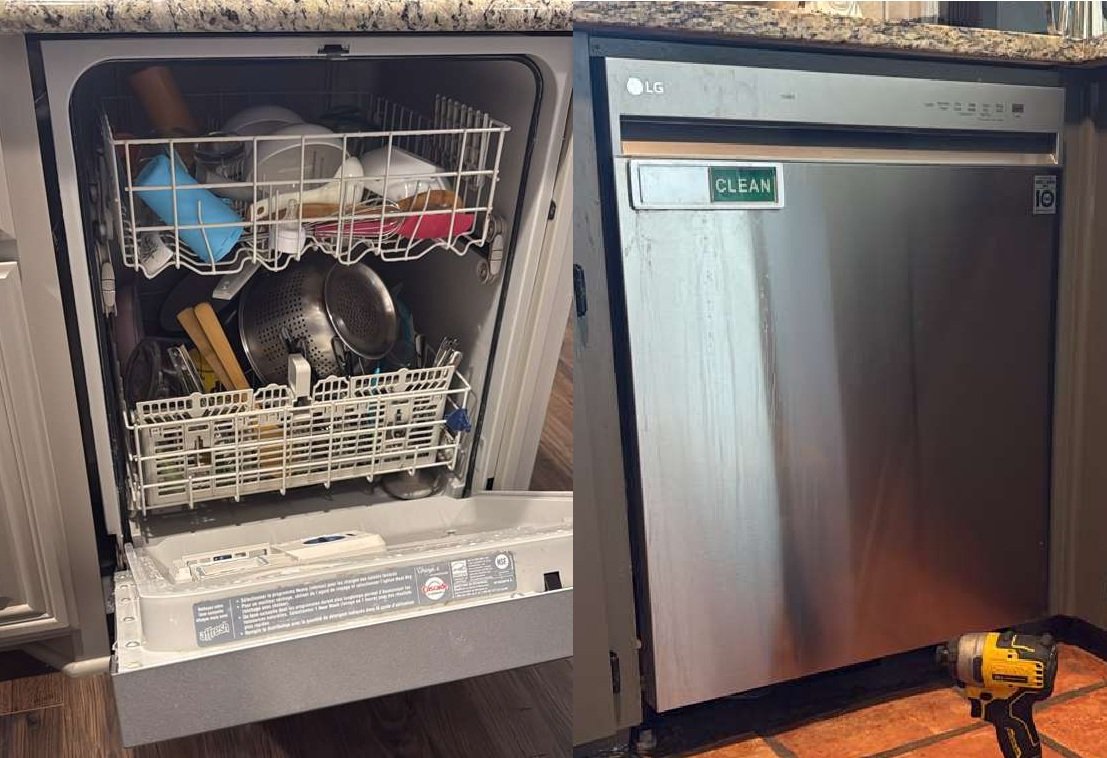
A dishwasher is designed to make life easier by delivering sparkling clean dishes with minimal effort. However, if your dishwasher not cleaning dishes properly or are coming out dirty, cloudy, or covered with food residue after every cycle, your dishwasher may need attention.
Before assuming you need a new appliance, it’s worth understanding the common reasons why a dishwasher may not be cleaning effectively. Many issues can be resolved with simple maintenance, while others require professional repair.
Table of Contents
In this guide, we’ll explain the most common causes of poor dishwasher performance, what you can check yourself, and when it’s time to call an experienced appliance repair technician.
1. Clogged Spray Arms
The spray arms distribute water throughout the dishwasher. Over time, food particles, grease, and mineral deposits can clog the small holes, reducing water pressure and preventing dishes from being cleaned properly.
What You Can Do:
- Remove the spray arms according to the manufacturer’s instructions.
- Rinse them under warm water.
- Use a toothpick or small brush to clear blocked holes.
- Reinstall the spray arms securely before running another cycle.
2. Dirty Dishwasher Filter
Most modern dishwashers have a removable filter that traps food particles. If it becomes clogged, dirty water can circulate back onto your dishes.
Signs of a dirty filter include:
- Food residue left on dishes
- Bad odors
- Standing water at the bottom of the dishwasher
- Longer wash cycles
Cleaning the filter every month helps maintain peak cleaning performance.
3. Overloading the Dishwasher
Overloading prevents water and detergent from reaching every item. Large pots, pans, and cutting boards can also block the spray arms from rotating freely.
For better results:
- Leave space between dishes.
- Face dirty surfaces toward the spray arms.
- Avoid stacking dishes too closely together.
4. Using the Wrong Detergent
Low-quality detergent or using too little detergent can reduce cleaning performance. Hard water may also require a rinse aid to prevent cloudy glasses and mineral spots.
Always use dishwasher detergent recommended for your appliance and avoid using regular dish soap.
5. Low Water Temperature
Dishwashers typically perform best when the incoming water temperature is around 120°F (49°C).
If the water isn’t hot enough:
- Grease may not dissolve completely.
- Food particles can remain on dishes.
- Sanitizing performance decreases.
Run the kitchen faucet until the water becomes hot before starting a dishwasher cycle.
6. Faulty Water Inlet Valve
The water inlet valve controls how much water enters the dishwasher. If it’s partially blocked or failing, the dishwasher may not receive enough water to clean dishes effectively.
Common symptoms include:
- Weak spray pressure
- Incomplete wash cycles
- Dishes consistently coming out dirty
This component should be inspected and replaced by a qualified technician if necessary.
7. Worn Wash Pump or Circulation Motor
The circulation pump sends water through the spray arms. If the pump or motor becomes worn, water pressure decreases and cleaning performance suffers.
Signs include:
- Humming or grinding noises
- Weak water spray
- Poor cleaning results despite proper loading
Professional diagnosis is recommended to identify the exact cause.
8. Damaged Spray Arm Bearings or Seals
If the spray arms cannot rotate freely because of worn bearings or damaged seals, water won’t reach every dish during the cycle.
Replacing worn components can restore proper cleaning performance and extend the life of your dishwasher.
Dishwasher Maintenance Tips
Routine maintenance can help keep your dishwasher performing like new.
- Clean the filter every month.
- Inspect the spray arms for blockages.
- Use high-quality dishwasher detergent.
- Add rinse aid if you have hard water.
- Avoid overloading the dishwasher.
- Wipe the door gasket regularly.
- Run a dishwasher cleaner every one to two months.
Preventive maintenance helps improve cleaning performance, reduce odors, and extend the life of your appliance.
When Should You Call a Professional when Dishwasher Not Cleaning Dishes Properly?
If you’ve cleaned the filter, checked the spray arms, and are still getting poor cleaning results, it’s time to schedule a professional inspection.
Ignoring dishwasher problems can lead to:
- Higher utility bills
- Water leaks
- Damage to dishes
- Increased wear on internal components
- More expensive repairs over time
An experienced technician can diagnose the issue quickly and recommend the most cost-effective solution.
Need Dishwasher Repair in Arlington, TX?
At AHS Appliance Services, we provide fast and dependable dishwasher repair for homeowners throughout Arlington, Fort Worth, Grand Prairie, Mansfield, Bedford, Euless, Hurst, Keller, Southlake, Grapevine, Burleson, Crowley, Colleyville, North Richland Hills, and surrounding communities.
Our experienced technicians repair all major dishwasher brands and models. Whether your dishwasher isn’t cleaning properly, won’t drain, is leaking, or won’t start, we’re ready to help.
Call AHS Appliance Services today at (817) 522-3699 to schedule your dishwasher repair appointment.
Frequently Asked Questions
The most common causes include clogged spray arms, a dirty filter, overloading, low water temperature, or a failing circulation pump.
Cleaning the filter once a month is recommended for most households. Homes that use the dishwasher daily may benefit from more frequent cleaning.
Cloudy glasses are often caused by hard water, insufficient rinse aid, or low water temperature.
In many cases, yes. If your dishwasher is less than 10 years old and the repair cost is reasonable, repairing it is often more economical than replacing it.
