

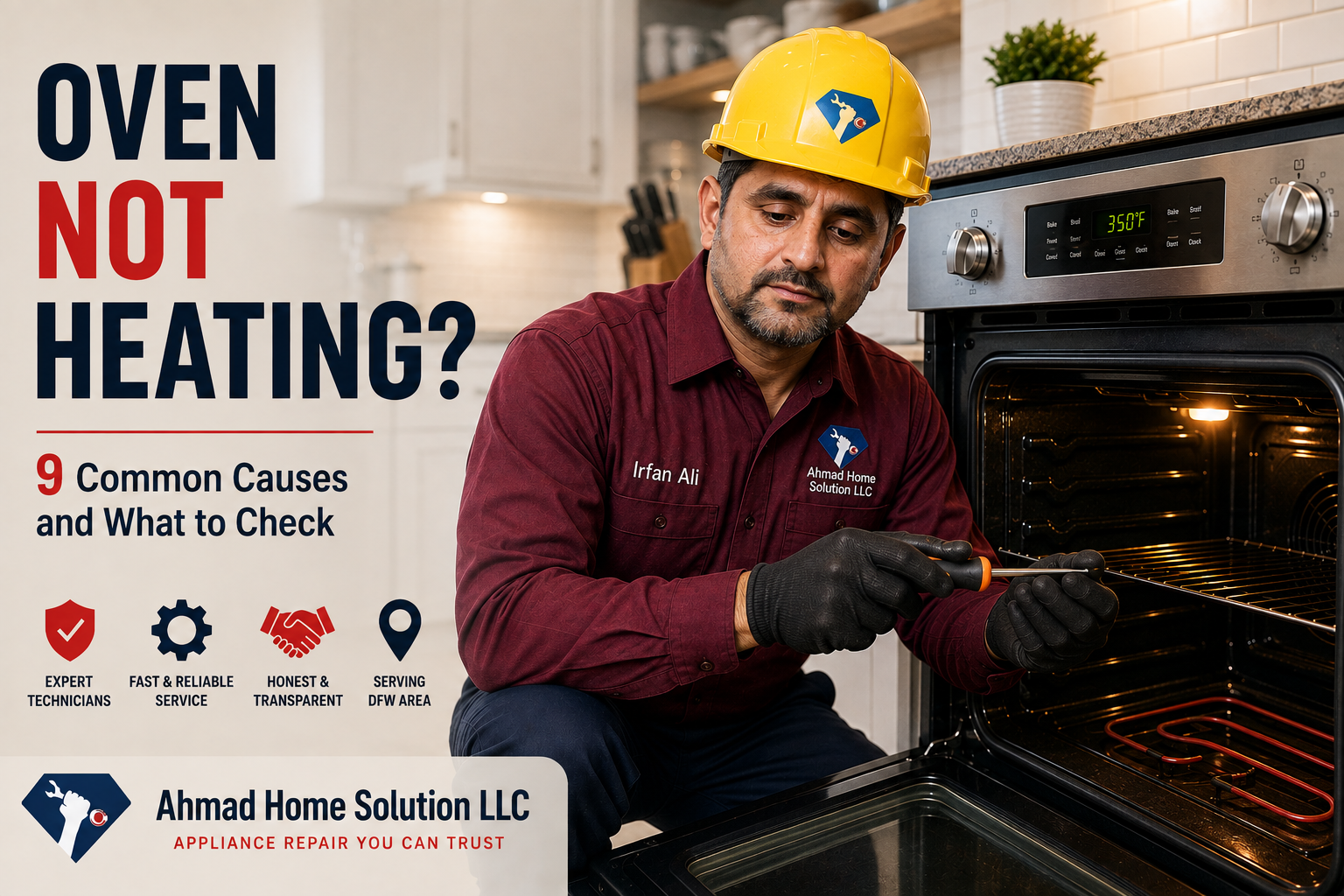
Nothing derails dinner plans faster than turning on your oven, setting the temperature, and coming back later to find that it’s still cold i.e. your oven not heating. Whether you’re preparing a quick weeknight meal or baking for a special occasion, an oven that isn’t heating properly can be a major inconvenience.
The good news is that an oven that won’t heat doesn’t always mean you need to replace the appliance. Several common problems can cause an oven to stop heating, including a damaged heating element, weak gas igniter, faulty temperature sensor, electrical issue, or control problem.
In this guide, we’ll explain 9 common reasons your oven isn’t heating, what you can safely check yourself, and when it’s time to contact a professional appliance repair technician.
Safety First: Never work on live electrical components, gas connections, heating elements, or internal oven wiring yourself. Before performing any basic inspection, make sure the appliance is completely cool. If you smell gas, stop using the appliance and contact your gas provider or a qualified professional.
Table of Contents
9 Common Reasons Your Oven Isn’t Heating
1. Burned-Out Bake or Broil Element
Electric ovens typically use heating elements to generate heat. The bake element is generally located at the bottom of the oven, while the broil element is located near the top.
Over time, heating elements can crack, blister, or burn out.
Common signs include:
- The oven turns on but doesn’t heat.
- Food remains undercooked.
- The heating element has visible damage.
- The oven heats unevenly.
- The bake or broil function doesn’t produce heat.
What you can safely check:
With the oven completely cool, visually inspect the heating element for obvious cracks, breaks, blistering, or burn marks. Avoid touching or removing the element unless you’re qualified to do so.
If the element appears damaged or the oven isn’t producing heat, a professional technician can test the component and determine whether replacement is necessary.
2. Weak or Malfunctioning Igniter in a Gas Oven
Gas ovens use an ignition system to light the burner and produce heat. If the igniter becomes weak or fails, the oven may not heat even though the controls and display appear to work normally.
Common signs include:
- The oven doesn’t get hot.
- The oven takes unusually long to preheat.
- The igniter glows but the burner doesn’t ignite.
- The oven heats inconsistently.
A gas oven ignition problem can involve several components, so professional diagnosis is recommended.
What to check:
If your gas oven isn’t heating, don’t attempt to repair or adjust the gas system yourself. A qualified appliance technician can safely test the ignition system and determine the faulty component.
3. Faulty Temperature Sensor
The temperature sensor monitors the temperature inside the oven and communicates with the control system.
If the sensor becomes defective, the oven may have difficulty maintaining the temperature you selected.
Possible symptoms include:
- Food consistently comes out undercooked.
- Food cooks too quickly or burns.
- The oven takes too long to reach temperature.
- Temperature fluctuates significantly.
- The oven shuts off unexpectedly.
What you can check:
With the oven completely cool, make sure the temperature sensor isn’t visibly damaged or bent out of position.
If temperature problems continue, a technician can test the sensor and determine whether it needs replacement or whether another component is responsible.
4. Tripped Circuit Breaker or Power Problem
Electric ovens require a substantial electrical supply. If the oven’s circuit breaker trips, some functions may appear to work while the heating components don’t.
For example, you may still see the clock or display even though the oven isn’t producing heat.
Possible signs include:
- Display works but oven doesn’t heat.
- Bake and broil functions don’t produce heat.
- Oven suddenly stopped working.
- Circuit breaker has tripped.
What you can check:
Check your home’s electrical panel to see whether the oven’s circuit breaker has tripped.
If you’re comfortable doing so, you can reset the breaker once according to your home’s electrical-panel instructions.
If the breaker trips again, don’t repeatedly reset it. A recurring trip may indicate an electrical or appliance problem that requires professional diagnosis.
5. Damaged Oven Door Gasket
The gasket around your oven door helps keep heat inside the cooking chamber.
If the gasket is cracked, torn, loose, or badly worn, heat can escape around the door and make it difficult for the oven to maintain the correct temperature.
Signs of a damaged gasket include:
- Heat escaping around the door.
- Oven taking unusually long to preheat.
- Food taking longer to cook.
- Visible cracks or tears in the seal.
- Door doesn’t appear to close properly.
What you can check:
With the oven cool, visually inspect the gasket around the door.
If it is damaged or no longer seals properly, replacing it may restore the oven’s ability to maintain temperature.
6. Blown Thermal Fuse or Safety Thermostat
Many ovens include safety components designed to protect the appliance from excessive temperatures.
If an oven overheats, a thermal fuse or safety thermostat may interrupt operation. This can sometimes happen after a high-temperature self-cleaning cycle.
Possible symptoms include:
- Oven suddenly stops heating.
- Oven stops working after a self-cleaning cycle.
- Certain oven functions no longer operate.
- The appliance may appear to have power but won’t heat.
Testing or replacing internal safety components should be handled by a qualified appliance repair technician.
7. Control Board Malfunction
Modern ovens rely on electronic control boards to manage temperature, heating functions, timers, sensors, and other operations.
If the control board or one of its components fails, the oven may stop heating even though the heating elements themselves are functioning correctly.
Possible symptoms include:
- Error codes.
- Unresponsive buttons.
- Oven doesn’t start a heating cycle.
- Heating functions stop working.
- Temperature settings behave incorrectly.
You can try turning the appliance off according to the manufacturer’s instructions and restarting it.
If the problem continues, professional diagnosis is recommended before replacing an expensive control board.
8. Demo Mode or Control Lock Is Activated
Some modern ovens include Demo Mode, which allows the display and controls to operate without activating the heating system.
It’s possible for this mode or a control-lock function to be activated accidentally.
Possible signs include:
- Display works normally.
- Buttons respond.
- Oven doesn’t produce heat.
- A lock symbol or demo indicator appears on the display.
What to check:
Check your owner’s manual for instructions on disabling Demo Mode or Control Lock.
The exact procedure varies by brand and model, so avoid assuming that the same button combination works for every oven.
9. Gas Supply Problem
For gas ovens, the problem may sometimes be related to the gas supply rather than the oven itself.
A closed shut-off valve or another gas-supply issue can prevent the burner from producing heat.
Possible signs include:
- Oven doesn’t heat.
- Gas burner doesn’t ignite.
- Other gas appliances may also be affected.
- The oven recently stopped working after maintenance or installation.
If you suspect a gas-supply problem, do not attempt to repair the gas line or internal gas components yourself.
If you smell gas, stop using the appliance, leave the area if necessary, and contact the appropriate gas utility or qualified professional.
Quick Oven Troubleshooting Guide
| Problem | Possible Cause | Recommended Action |
| Oven turns on but doesn’t heat | Heating element or control problem | Professional diagnosis |
| Electric oven isn’t heating | Heating element or power issue | Check breaker; call technician if unresolved |
| Gas oven isn’t heating | Ignition or gas-supply issue | Professional inspection |
| Oven takes too long to heat | Sensor, element, igniter, or gasket | Schedule inspection |
| Oven temperature is inaccurate | Temperature sensor or calibration issue | Professional diagnosis |
| Oven stopped after self-cleaning | Thermal safety component | Technician inspection |
| Display works but oven stays cold | Power, control, or heating component | Professional diagnosis |
| Oven shows an error code | Sensor or electronic issue | Check owner’s manual and contact technician if needed |
What Can You Safely Check Yourself?
Before scheduling an appliance repair appointment, homeowners can perform a few basic checks:
- Confirm the oven is set to the correct cooking mode.
- Verify the desired temperature.
- Check whether the circuit breaker has tripped.
- Make sure the oven door closes completely.
- Inspect the door gasket for visible damage.
- Look for obvious damage to an electric heating element when the oven is completely cool.
- Check the owner’s manual for Demo Mode or Control Lock instructions.
Avoid removing appliance panels or testing live electrical components.
For gas ovens, never attempt to repair gas lines, valves, burners, or ignition components unless you are properly qualified.
When Should You Call a Professional?
Some oven problems are simple, while others require specialized tools and experience.
Contact a professional oven repair technician if:
- Your oven isn’t heating at all.
- The oven takes much longer than normal to preheat.
- The oven temperature is inconsistent.
- The circuit breaker repeatedly trips.
- The gas burner doesn’t ignite.
- You smell gas.
- The oven displays repeated error codes.
- The heating element appears damaged.
- The oven stopped working after a self-cleaning cycle.
- You suspect an electrical or gas-component failure.
Professional diagnosis can help identify the actual cause and prevent unnecessary part replacement.
How to Maintain Your Oven?
Regular maintenance can help improve oven performance and extend the life of your appliance.
Keep the Oven Clean
Remove excessive grease and food buildup. Heavy buildup can create smoke, odors, and other problems.
Check the Door Seal
Inspect the gasket periodically for cracks, tears, or areas where it has become loose.
Avoid Slamming the Door
Repeatedly slamming the oven door can damage hinges and seals.
Don’t Use the Oven Door as a Shelf
Placing heavy objects on the door can damage the hinges and affect the seal.
Address Problems Early
If your oven starts heating unevenly or takes significantly longer to preheat, don’t wait until it stops working completely. Early diagnosis may help prevent a more expensive repair.
Need Oven Repair in Arlington, TX?
If your oven isn’t heating, takes too long to preheat, or isn’t maintaining the correct temperature, AHS Appliance Services can help diagnose the problem.
Our appliance repair technicians service major oven and range brands and provide appliance repair throughout Arlington, Fort Worth, Grand Prairie, Mansfield, Bedford, Euless, Hurst, Keller, Southlake, Grapevine, Burleson, Crowley, Colleyville, North Richland Hills, and surrounding DFW communities.
Whether you’re dealing with an electric oven that isn’t heating, a gas oven ignition problem, inconsistent temperatures, or another appliance issue, our team can help identify the cause and recommend the appropriate repair.
Call AHS Appliance Services at (817) 522-3699 to schedule your appliance repair service.
Frequently Asked Questions
If the display and lights work but the oven doesn’t produce heat, possible causes include a failed heating element, power issue, temperature sensor problem, control board failure, or—on gas models—a faulty ignition system.
Common causes include a damaged bake element, electrical supply problem, temperature sensor issue, thermal fuse, or electronic control problem.
A gas oven may fail to heat because of a weak igniter, ignition-system problem, gas-supply issue, or another faulty component. Gas-related problems should be professionally diagnosed.
A heating element may have visible cracks, blistering, burn marks, or breaks. However, some element failures aren’t visible, so professional testing may be necessary.
Slow preheating can be caused by a weak heating element, faulty igniter, temperature sensor problem, damaged door gasket, power issue, or control-system problem.
Heavy grease and food buildup can affect oven performance, but a complete loss of heating is more commonly associated with a failed component or power, ignition, or control problem.
If the oven is behaving unusually, repeatedly tripping the breaker, producing unusual smells, or showing signs of a gas or electrical problem, stop using it and have it inspected by a qualified technician.
The best choice depends on the appliance’s age, condition, repair cost, and failed component. A professional diagnosis can help you determine whether repair or replacement makes more sense.
Final Thoughts (Oven Not Heating)
An oven that isn’t heating doesn’t automatically mean you need a new appliance. Problems such as damaged heating elements, faulty sensors, ignition issues, power problems, door seals, and control components can often be diagnosed and repaired.
The key is identifying the actual cause before replacing parts or purchasing a new oven.
If you’ve completed the basic safe checks and your oven still isn’t heating properly, professional appliance repair can help you get your kitchen back to normal.
Need help with an oven that isn’t heating? Contact AHS Appliance Services at (817) 522-3699 to schedule your service.
