

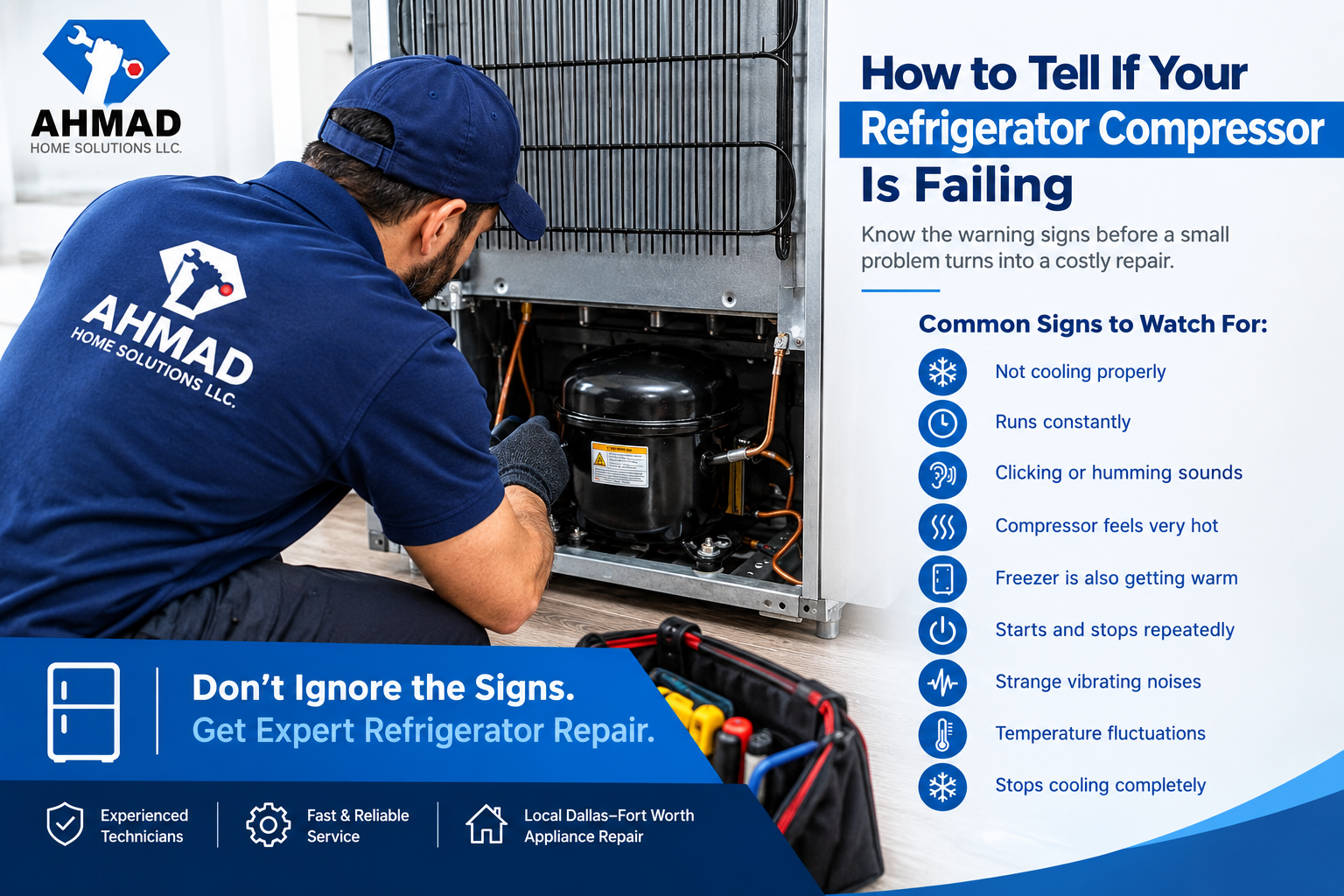
Your refrigerator works around the clock to keep food fresh and drinks cold. But when something goes wrong with its cooling system, you may notice unusual sounds, warmer temperatures, or a refrigerator that seems to run constantly.
One possible cause is a failing refrigerator compressor.
The compressor is one of the most important components in your refrigerator’s cooling system. However, a refrigerator that is not cooling does not automatically mean the compressor has failed. Several other components can cause similar symptoms.
In this guide, we’ll explain the common signs of a bad refrigerator compressor, what can cause compressor problems, what you can safely check, and when it is time to call a professional refrigerator repair technician.
Table of Contents
What Is a Refrigerator Compressor?
The refrigerator compressor is a mechanical component that helps circulate refrigerant through the appliance’s sealed cooling system.
During normal operation, the compressor compresses the refrigerant and moves it through the system. This allows heat to be removed from inside the refrigerator so the appliance can maintain the proper temperature.
Because the compressor plays such an important role in the cooling process, a serious compressor problem can eventually affect both the refrigerator and freezer compartments.
9 Signs Your Refrigerator Compressor Is Failing
A compressor problem can show up in several different ways. Here are some of the most common symptoms to watch for.
1. Your Refrigerator Is Not Cooling Properly
One of the most obvious signs is a refrigerator that is no longer maintaining the proper temperature.
You may notice that:
- Food feels warmer than usual
- Drinks are not getting cold
- The refrigerator takes longer to cool
- The freezer is also becoming warmer
- The appliance runs for long periods without reaching the correct temperature
However, poor cooling can have many causes. A professional diagnosis is important before determining that the compressor is the problem.
2. The Refrigerator Runs Almost Constantly
It is normal for a refrigerator compressor to cycle on and off throughout the day.
If your refrigerator appears to run continuously, it may be struggling to reach the desired temperature.
Possible causes include dirty condenser coils, restricted airflow, a faulty fan, a refrigerant-related problem, or compressor issues.
If the appliance runs constantly and still does not cool properly, it should be inspected.
3. You Hear Repeated Clicking or Humming
Refrigerators naturally make sounds while operating. A soft hum is usually normal.
Repeated clicking, buzzing, or humming followed by the refrigerator shutting down can be a warning sign.
In some situations, the problem may involve the compressor’s starting components rather than the compressor itself.
A technician can test the system to determine what is actually causing the noise.
4. The Compressor Becomes Extremely Hot
A refrigerator compressor normally becomes warm while operating.
However, excessive heat combined with poor cooling or repeated starting attempts may indicate a problem.
A compressor that is working harder than normal may be dealing with another system issue, or the compressor itself may be failing.
Avoid unnecessarily touching the compressor or other internal components because they can become very hot.
5. The Freezer Is Also Getting Warm
When both the refrigerator and freezer are becoming warmer, the problem may involve the cooling system.
Because the compressor helps circulate refrigerant throughout the system, a compressor problem can affect both compartments.
However, other issues can produce the same symptom, including fan problems, airflow restrictions, control problems, and sealed-system issues.
6. The Refrigerator Starts and Stops Repeatedly
Does your refrigerator start, run for a short time, stop, and then attempt to start again?
This behavior may be related to the compressor or its starting components.
A defective start relay, electrical problem, overheating, or compressor issue can cause repeated starting attempts.
Rather than replacing parts based only on symptoms, have the refrigerator properly diagnosed.
7. Your Refrigerator Is Making Unusual Vibrating Sounds
A refrigerator can produce some vibration during normal operation.
But if you suddenly notice loud humming, buzzing, rattling, or unusual vibration coming from the compressor area, it is worth investigating.
Sometimes the cause is something simple, such as the appliance not sitting level. Other times, the noise can indicate a mechanical or electrical problem.
8. The Refrigerator Is Struggling to Maintain Temperature
You may notice that the refrigerator becomes cold at some times but warmer at others.
Temperature fluctuations can have multiple causes, including airflow problems, faulty sensors, fan issues, door-seal problems, or cooling-system problems.
If the refrigerator repeatedly struggles to maintain a consistent temperature, professional diagnosis can help identify the underlying issue.
9. The Refrigerator Stops Cooling Completely
A refrigerator that has completely stopped cooling needs attention as soon as possible.
If the interior temperature is rising and the compressor is not operating normally, there may be an electrical, control, compressor, or sealed-system problem.
Because food can spoil when temperatures rise too much, do not ignore a refrigerator that suddenly stops cooling.
What Causes Refrigerator Compressor Problems?
A compressor can fail for several reasons. Some common possibilities include:
- Normal wear over time
- Electrical problems
- Overheating
- Faulty starting components
- Problems within the sealed cooling system
- Refrigerant-related issues
- Excessive workload caused by another refrigerator problem
- Mechanical failure
In some cases, the compressor may appear to be the problem when another component is actually causing the refrigerator to malfunction.
That’s why proper troubleshooting is important.
Does a Refrigerator Not Cooling Always Mean the Compressor Is Bad?
No.
This is one of the most important things to understand.
A refrigerator that is not cooling can have many possible causes. Problems with fans, airflow, temperature controls, condenser coils, electrical components, door seals, or the sealed system can create symptoms that look similar to compressor failure.
Replacing the compressor without confirming the actual cause can result in unnecessary repairs.
A qualified appliance technician can inspect the refrigerator and test the relevant components before recommending a repair.
What Can You Safely Check Yourself?
Before scheduling refrigerator repair, there are a few basic things homeowners can check.
Check the Power
Make sure the refrigerator is receiving power and that the circuit has not tripped.
Check the Temperature Setting
Verify that the refrigerator and freezer temperature controls have not accidentally been changed.
Check Airflow
Make sure food or containers are not blocking the refrigerator’s interior air vents.
Check the Door Seal
Look around the refrigerator and freezer doors for obvious gaps or damaged seals that could allow cold air to escape.
Listen for Unusual Sounds
Pay attention to whether the refrigerator is humming normally or repeatedly clicking, buzzing, or attempting to start.
If the refrigerator continues to have cooling problems after these basic checks, professional diagnosis is recommended.
Can You Repair a Refrigerator Compressor Yourself?
Compressor repair or replacement is not a typical DIY appliance repair.
The compressor is part of the refrigerator’s sealed refrigeration system. Working on this system requires specialized equipment, technical knowledge, and appropriate procedures.
Attempting to open or service the sealed system without the proper equipment can damage the appliance and create safety risks.
If you suspect compressor failure, it is better to have the refrigerator inspected by a qualified appliance repair professional.
How Do Technicians Diagnose a Bad Refrigerator Compressor?
A professional technician does not rely on one symptom alone.
Depending on the refrigerator and the symptoms, diagnosis may include checking:
- Refrigerator and freezer temperatures
- Compressor operation
- Electrical connections
- Starting components
- Condenser and evaporator fans
- Airflow
- Condenser condition
- Other cooling-system components
- Signs of sealed-system problems
The goal is to identify the actual cause of the cooling problem rather than replacing a component unnecessarily.
Should You Repair or Replace a Refrigerator With a Bad Compressor?
The right decision depends on several factors.
Consider:
- The age of the refrigerator
- The overall condition of the appliance
- The type and severity of the compressor problem
- Availability of replacement parts
- The expected lifespan of the appliance
- The cost and complexity of the repair
A professional technician can help you understand the condition of the appliance and your available repair options.
How to Prevent Refrigerator Cooling Problems?
Although not every compressor failure can be prevented, regular care can help your refrigerator operate efficiently.
Keep Air Vents Clear
Do not block the interior vents with food containers. Proper airflow is important for maintaining consistent temperatures.
Avoid Overloading the Refrigerator
An excessively packed refrigerator can restrict airflow and make it harder for the appliance to maintain the desired temperature.
Keep the Doors Closed
Leaving the refrigerator door open for long periods allows cold air to escape and makes the appliance work harder.
Inspect Door Seals
Damaged or loose door seals can allow cold air to escape continuously.
Pay Attention to Warning Signs
Unusual sounds, temperature changes, excessive running, or repeated starting attempts should not be ignored.
Addressing problems early may help prevent a complete breakdown.
When Should You Call a Refrigerator Repair Technician?
You should consider professional service if:
- Your refrigerator is not cooling properly
- Your freezer is becoming warm
- The refrigerator runs continuously
- You hear repeated clicking or buzzing
- The compressor appears to be overheating
- The appliance repeatedly starts and stops
- The refrigerator stops cooling completely
- You notice recurring temperature fluctuations
A professional inspection can determine whether the compressor is actually failing or whether another component is responsible.
Refrigerator Repair Services in the Dallas–Fort Worth Area
A refrigerator problem can quickly become stressful, especially when you rely on the appliance to keep food fresh every day.
If your refrigerator is not cooling properly, making unusual noises, or showing signs of a possible compressor problem, professional diagnosis can help identify the cause.
Ahmad Home Solutions LLC provides professional appliance repair services for homeowners throughout the Dallas–Fort Worth area.
Our appliance services include refrigerator repair and other major home appliance repairs. If you are experiencing refrigerator cooling problems, contact Ahmad Home Solutions LLC to schedule service.
Don’t Ignore Refrigerator Cooling Problems
A refrigerator that is struggling to cool may be showing an early warning sign of a larger problem. Whether the issue is related to the compressor, electrical components, fans, airflow, or another part of the cooling system, getting the problem diagnosed can help you make an informed repair decision.
Need refrigerator repair? Contact Ahmad Home Solutions LLC today to schedule an appointment.
Frequently Asked Questions
Common signs include poor cooling, a refrigerator that runs continuously, repeated clicking or starting attempts, unusual compressor noises, excessive heat, and a freezer that is also becoming warm. These symptoms can also be caused by other components, so professional diagnosis is recommended.
If your refrigerator is not cooling properly and the compressor is running continuously, repeatedly trying to start, making unusual sounds, or becoming excessively hot, the compressor may be experiencing a problem. However, testing is needed to confirm the cause.
In some cases, the problem may involve a component associated with the compressor rather than the compressor itself. A technician should diagnose the refrigerator before determining whether compressor repair or replacement is appropriate.
A refrigerator can run without cooling properly for several reasons, including airflow problems, dirty condenser components, fan failure, electrical problems, refrigerant-related issues, or compressor problems.
The lifespan of a refrigerator compressor varies depending on the appliance, usage, maintenance, operating conditions, and other factors. When a compressor begins showing unusual symptoms, professional inspection can determine its condition.
If the refrigerator is not maintaining the proper temperature, continuing to use it can result in food spoilage. If you suspect a serious cooling problem, have the appliance inspected as soon as possible.
Repeated clicking can be associated with the compressor’s starting components, electrical problems, or a compressor issue. A technician can test the relevant components to determine the cause.
Yes. Because the compressor is an important part of the refrigeration system, a serious compressor failure can prevent the refrigerator from cooling properly. However, several other problems can produce the same symptom.
The decision depends on the refrigerator’s age, condition, repair requirements, parts availability, and overall repair considerations. A professional diagnosis can help you understand your options.
A refrigerator that is not maintaining a safe temperature should be addressed promptly. Delaying service can lead to food spoilage and potentially a more serious appliance problem.
