
When a major home appliance stops working, it can quickly disrupt your entire day. A refrigerator that isn’t cooling can put your groceries at risk, while a washing machine that won’t drain or a dryer that isn’t heating can turn a normal household chore into a frustrating problem.
For homeowners looking for appliance repair in Fort Worth, TX, understanding the most common appliance problems can help you identify when basic troubleshooting may be enough and when professional service is needed.
In this guide, we’ll cover some of the most common appliance problems Fort Worth homeowners experience, what may cause them, what you can safely check, and when it’s time to call a professional appliance repair technician.
Safety First: Always follow the manufacturer’s safety instructions before inspecting an appliance. Never work on live electrical wiring, gas connections, refrigerant systems, microwave high-voltage components, or other internal components unless you are properly qualified.
Table of Contents
Common Appliance Problems in Fort Worth Homes
Different appliances can fail in different ways, but many repair problems involve a relatively small number of common symptoms.
Here are some of the most frequent issues homeowners may encounter.
1. Refrigerator Not Cooling
A refrigerator that isn’t cooling properly is one of the more urgent appliance problems because perishable food can spoil if safe temperatures aren’t maintained.
Common causes include:
- Incorrect temperature settings
- Blocked interior air vents
- Dirty condenser coils
- Damaged door gasket
- Evaporator fan problems
- Temperature sensor problems
- Compressor or start-system issues
- Sealed-system problems
What you can check
Start by checking the temperature setting and making sure food isn’t blocking the interior air vents.
You can also inspect the refrigerator door gasket for visible cracks, tears, or areas where the seal isn’t closing properly.
If the refrigerator continues running but isn’t maintaining a safe temperature, professional refrigerator repair may be necessary.
Related guide: Why Is My Refrigerator Not Cooling? 7 Common Causes and What You Can Do
2. Washing Machine Not Draining
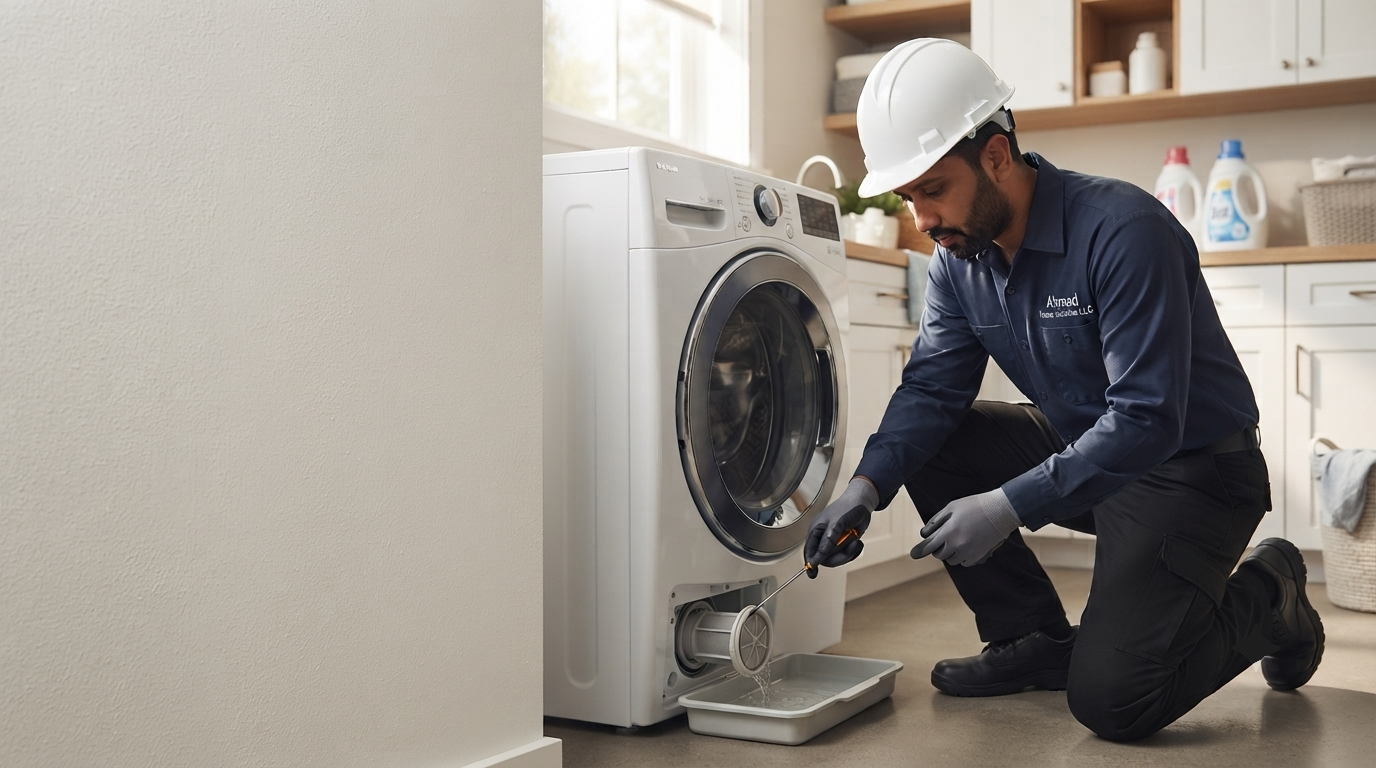
A washing machine that won’t drain can leave dirty water sitting inside the tub at the end of a cycle. The problem may be caused by a clogged drain system, pump problem, hose restriction, or another component.
Possible causes include:
- Clogged drain hose
- Blocked pump filter
- Drain pump problem
- Kinked hose
- Excessive debris
- Control or electrical problems
What you can check
Check the drain hose for obvious kinks or restrictions.
If your washer has a manufacturer-accessible pump filter, follow the owner’s manual instructions for cleaning it.
If the washer still won’t drain, avoid repeatedly running cycles with standing water inside the machine. A professional technician can diagnose the drainage system.
Related guide: Washing Machine Not Draining? 8 Common Causes and How to Fix It
3. Dryer Taking Too Long to Dry
A dryer that requires multiple cycles to dry clothes isn’t just inconvenient. It can also indicate an airflow or heating problem.
Common causes include:
- Restricted dryer vent
- Clogged lint filter
- Poor airflow
- Weak heating component
- Moisture-sensing issue
- Blower problem
- Overloaded dryer
What you can check
Clean the lint filter before each load and make sure the dryer isn’t overloaded.
Also check whether the dryer vent system has adequate airflow.
If the dryer still takes significantly longer than normal to dry clothes, professional dryer inspection may be necessary.
Related guide: Why Is My Dryer Taking Too Long to Dry? 8 Common Causes and Easy Solutions
4. Dishwasher Not Cleaning Dishes Properly
Opening the dishwasher after a complete cycle and finding dirty dishes can be frustrating. Poor cleaning performance can have several causes.
Common causes include:
- Clogged spray arms
- Dirty dishwasher filter
- Incorrect loading
- Low water temperature
- Detergent problems
- Water-inlet problems
- Circulation pump issues
What you can check
Make sure dishes aren’t blocking the spray arms.
Clean the dishwasher filter according to the manufacturer’s instructions and remove visible food debris.
If the dishwasher still isn’t cleaning properly, a technician can inspect the water circulation and other components.
Related guide: Dishwasher Not Cleaning Dishes Properly? 8 Common Causes and How to Fix It
5. Oven Not Heating
An oven that turns on but doesn’t get hot can quickly ruin dinner plans. Electric and gas ovens use different heating and ignition systems, so the cause can vary depending on the appliance.
Possible causes include:
- Failed heating element in an electric oven
- Weak gas igniter
- Temperature sensor problem
- Thermal safety component problem
- Electrical supply issue
- Control-board problem
What you can safely check
Make sure the oven is set to the correct cooking mode and temperature.
For an electric oven, you can visually inspect the heating element when the appliance is completely cool for obvious damage.
Gas-related and internal electrical problems should be handled by a qualified appliance repair professional.
Related guide: Oven Not Heating? 9 Common Causes and What to Check
6. Microwave Not Heating
A microwave can sometimes appear to work normally while producing little or no heat. The display may operate, the light may turn on, and the turntable may spin while food remains cold.
Possible causes include:
- Incorrect power setting
- Door-interlock problem
- Magnetron failure
- High-voltage component failure
- Control-board problem
What you can safely check
Make sure the microwave isn’t accidentally set to a low-power or defrost mode.
You can perform a simple water test using a microwave-safe container.
Warning: Never remove the microwave cabinet. Internal microwave components can contain dangerous high voltage even after the appliance has been unplugged.
Related guide: Microwave Not Heating? 7 Common Causes and What to Check
Common Causes of Appliance Breakdowns
Appliances can develop problems for many reasons. Understanding some of the common causes can help homeowners recognize problems early.
Normal Wear and Tear
Components such as motors, pumps, seals, fans, and heating elements can wear out through normal use.
Lack of Maintenance
Filters, vents, coils, and other areas can accumulate dust, debris, grease, or lint when they aren’t cleaned regularly.
Overloading
Frequently overloading washers, dryers, and dishwashers can put additional stress on certain components and affect performance.
Incorrect Use
Using the wrong detergent, blocking ventilation, overloading an appliance, or placing unsuitable items inside an appliance can contribute to problems.
Appliance Age
Even well-maintained appliances eventually reach a point where components can begin to fail more frequently.
Appliance Maintenance Tips for Fort Worth Homeowners
Regular maintenance can help appliances operate efficiently and may reduce avoidable problems.
Refrigerator
- Keep interior air vents clear.
- Check the door gasket for damage.
- Clean accessible condenser areas according to the manufacturer’s instructions.
- Avoid overloading the refrigerator.
Washing Machine
- Don’t consistently overload the washer.
- Inspect water hoses periodically.
- Clean accessible filters according to the manufacturer’s instructions.
- Leave the door open after certain cycles, when recommended, to allow the interior to dry.
Dryer
- Clean the lint filter after every load.
- Don’t overload the dryer.
- Make sure the exhaust system has adequate airflow.
- Have the vent system inspected if drying times increase or airflow becomes poor.
Dishwasher
- Clean the filter regularly.
- Keep spray arms clear.
- Don’t block the detergent dispenser.
- Follow the manufacturer’s recommended maintenance procedures.
Oven
- Keep the interior reasonably clean.
- Don’t place heavy objects on the oven door.
- Check the door gasket for visible damage.
- Address heating problems early.
Professional Diagnosis: Repair or Replace?
When an appliance stops working, many homeowners immediately wonder whether they should repair it or purchase a replacement.
There isn’t one answer that works for every situation.
Consider:
- The age of the appliance
- Overall condition
- Type of problem
- Cost of the repair
- Availability of replacement parts
- Energy efficiency of the existing appliance
- Cost of a comparable replacement
A professional diagnosis can help you understand the actual problem before spending money on replacement parts or a new appliance.
When Should You Call an Appliance Repair Professional?
While some basic troubleshooting can be performed safely, certain problems require professional attention.
Contact a qualified appliance repair technician if:
- The appliance won’t turn on.
- A circuit breaker repeatedly trips.
- You smell gas.
- You notice burning or electrical odors.
- The appliance is leaking water.
- The refrigerator isn’t maintaining a safe temperature.
- The appliance makes unusual noises.
- A heating component isn’t working.
- Basic troubleshooting hasn’t solved the problem.
Do not attempt DIY repairs involving:
- Live electrical wiring
- Internal electrical control boards
- Gas connections
- Refrigerant or sealed systems
- Microwave high-voltage components
Professional diagnosis can help identify the actual problem while reducing the risk of unnecessary part replacement.
Appliance Repair in Fort Worth, TX
When an appliance stops working, getting an accurate diagnosis can help you avoid unnecessary part replacements or premature appliance replacement.
Ahmad Home Solution provides appliance repair services for homeowners throughout Fort Worth, TX, and surrounding DFW communities.
Our team can help with common appliance problems involving:
- Refrigerators
- Washing machines
- Dryers
- Dishwashers
- Ovens
- Microwaves
- Other major household appliances
Whether your refrigerator isn’t cooling, your washer isn’t draining, your dryer is taking too long to dry, or another appliance is giving you trouble, professional diagnosis can help determine the appropriate next step.
Serving Fort Worth and Surrounding DFW Communities
Ahmad Home Solution serves homeowners throughout Fort Worth and surrounding DFW communities, including Arlington, Grand Prairie, Mansfield, Bedford, Euless, Hurst, Keller, Southlake, Grapevine, Burleson, Crowley, Colleyville, and North Richland Hills.
If you’re experiencing an appliance problem in Fort Worth, getting the issue diagnosed early may help prevent a minor problem from becoming a larger repair.
Need appliance repair in Fort Worth, TX? Call Ahmad Home Solution at (817) 522-3699 to schedule your service.
Frequently Asked Questions
Common problems include refrigerators not cooling, washing machines not draining or spinning, dryers taking too long to dry, dishwashers not cleaning properly, ovens not heating, and microwaves not heating.
If basic troubleshooting doesn’t solve the problem, or if the issue involves gas, electrical components, refrigerant, unusual burning smells, repeated breaker trips, or internal components, professional diagnosis is recommended.
It depends on the appliance’s age, condition, failed component, repair cost, parts availability, and replacement cost. A professional diagnosis can help you make an informed decision.
Regular cleaning, proper loading, following manufacturer instructions, checking seals and hoses, cleaning filters, and addressing unusual noises or performance changes early can help maintain your appliances.
Yes. Ahmad Home Solution provides appliance repair services for homeowners in Fort Worth and surrounding DFW communities.
Ahmad Home Solution provides repair services for major household appliances, including refrigerators, washers, dryers, dishwashers, ovens, microwaves, and other common home appliances.
Final Thoughts
Appliance problems are an unavoidable part of homeownership, but a malfunctioning appliance doesn’t always mean you need to replace it.
A refrigerator that isn’t cooling, a washer that won’t drain, a dryer taking too long to dry, a dishwasher leaving dishes dirty, or an oven that isn’t heating may have a specific component or maintenance issue that can be diagnosed and repaired.
The most important step is to identify the actual cause before purchasing replacement parts or a new appliance.
If you’re experiencing an appliance problem in Fort Worth, TX, Ahmad Home Solution can help diagnose the issue and determine the appropriate next step.
Call Ahmad Home Solution at (817) 522-3699 to schedule your appliance repair service.